


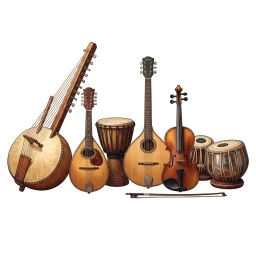
Here we go! The first name out of the hat is....
Hopefully more folk will get to know about this community and want to join. The weird thing is that I want to post it on Facebook to get folks that I already know interested. No - No! I decided I would try to build a community of folks who come together because of the music, not because of who they know. So - I'll stick to posting on here and hope that others do too. We've got a couple of interested bodies already. Let's see how we go.
I promised a few days ago that I'd start dropping things that the community (such as it is) might be interested in, referring to the international nature of music. Here's the first ----
Guinea Bissau
..yes, I too said "Where the hell is that?!" It is a tropical country on the Atlantic coast of West Africa, bordered by Senegal to the north and Guinea to the east and south:
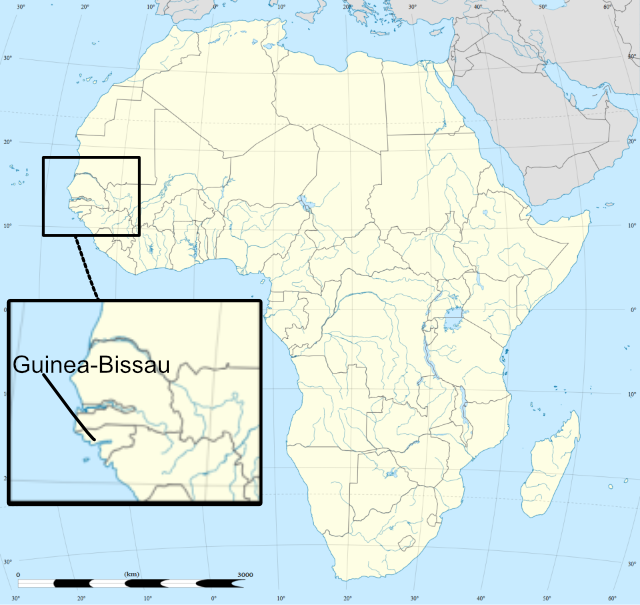
In the picture it looks tiny, but it has an area of 28000 square kilometres.
Music
The folk music of this smallish country is rooted in West Africa - one of the main instruments is the kora - but is also heavily influenced by Portugese and Western music in general. I have put links to several instances below.
Jambadon Dancing
The core rhythm is driven by traditional West African drumming, anchoring the dance in deep cultural roots.
Characterized by vibrant, communal energy, the dance is typically led by women. It incorporates dynamic footwork—treating the ground as a natural percussion instrument—alongside rhythmic hand-clapping and lively call-and-response singing.
Dancers often wear colorful traditional garments and head wraps, sometimes complemented by standout accessories such as red hats.
Traditional Mandinka music is built upon a rich acoustic heritage dating back centuries to the Mali Empire. Together, these instruments form the polyrhythmic foundation that anchors cultural celebrations, storytelling, and energetic dances like Jambadon:
The Kora: A sophisticated 21-string harp-lute crafted from a large calabash gourd covered in cow skin. It produces a flowing, harp-like sound traditionally played by hereditary griots (jalis) to recount history and genealogy.
The Djembe: A rope-tuned, skin-covered goblet drum played with bare hands. It serves as a primary rhythmic engine for driving communal dances with deep bass tones and sharp slaps.
The Balafon: A West African wooden xylophone built with tuned keys suspended over gourd resonators, often outfitted with mirlitons to create a distinctive buzzing timbre.
The Ngoni: A traditional luted string instrument featuring a skin-headed body, plucked to weave intricate, fast-paced melodic patterns beneath the main rhythm.
 Sign up for OddsRabbit
Join communities like /c/FolkRootsAcousticMusic and never miss posts like this. Every signup donates a meal for a child in need. Learn more
Comments
I fell in love with the djembe on a trip to Burkina Faso! I further fell in love hearing groups from all over the world performing at the Opera House in the town where I lived at the time.
Great post!
Thanks so much. Love your comment - obviously well-travelled.

😮 this is such an awesome post, thank you for sharing!
What got you into folk music? And do you play?
Thanks so much. What got me into folk music was being in amongst singers and storytellers as a youngster. I was listening and learning before I coould talk. From then it was just inspiration by the next musician I met, then the next... and so on.
Yes I play. I've been in bands and played solo for quite a while - longer than I care to remember. Music is who I am, rather than what I do.
Do you play and/or sing?
I don't which is why I'm always in awe of those who do haha. I don't have the musical talents unfortunately. Do you have any music that's posted online?
This is the only thing that's online at the moment, though I was working on a solo project before I had a serious injury and emergency operation in July.
https://open.spotify.com/album/4tMDhbPocoOEtuPWZHrQEj?si=gPgbyOBDRI2S_QeytdRYNg
Omg I completely missed this until Ravenmagpie responded. This is seriously amazing!
I know, right?
Wow! That’s great!!
No comments yet
Be the first to share your thoughts.